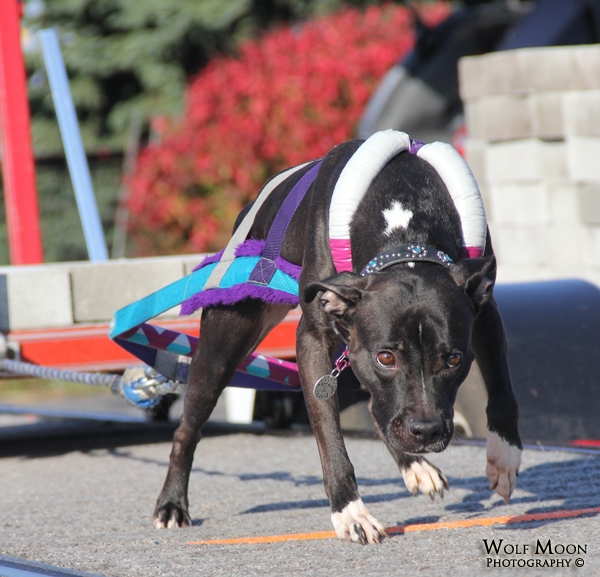
Wordless Wednesday: Pit Bull-Powered
Leave a reply
When I finally made the leap into hunting for a dog from a breeder, I knew it would be a long and tedious process. I made myself a list of things I wanted to do with the dog as it grew up, what characteristics I wanted and what look I wanted the dog to have. Looking back, that was the easy part. The two years that followed were agony because I couldn’t have my puppy right then and because there was so much that I had to do to find “the one.” Ultimately, it was worth all of the headaches, sleepless nights and research because I got not only the dog I wanted but the dog I needed. (And yes, I still made a ton of mistakes but those mistakes still blessed me with some very wonderful dogs despite my naive and ideal thoughts.)
Since I took the leap 6 years ago, I’ve gotten two more dogs from breeders and have learned to fine tune my requirements and limits to what I won’t put up with. Admittedly, I’ve become even pickier as I’ve grown from experience.
Breeder Code of Ethics
Every responsible breeder should have a strong set of ethics and morals when they breed or plan a litter. These two things are what separate these individuals from the puppy peddlers in the world and set the offspring they produce apart from every other “breeder” advertising puppies on Craigslist or the local street corner. For the American Pit Bull Terrier, these should be fine tuned because of the state that this breed is in because of over breeding and the breeding of sub par animals that should have been altered in the first place.
Some of the things that I personally look for when I start looking at breeders for a new prospect are as follows:
1.) Health Testing – This breed is prone to a lot of health concerns from cardiac issues, luxating patellas, hip dysplasia and so forth. When picking a breeder I would prefer to see some level of health testing on the stud dog and the bitch with a minimum of hips and heart tested through the Orthopedic Foundation for Animals (OFA) and/or PennHip.
Health Testing Available for the APBT: Hips (OFA/PennHip), Cardiac, Elbows, Patellas, Thyroid, Ataxia, CRD2 (Dayblindness), CERF (Eyes – annual test). Hips and elbows are done at 24 months through the OFA and hips can be done as young as 16 weeks through PennHip. The rest of the above health tests can be done at 12 months.
2.) Conformation and Performance Titles – While I personally put more strength in performance titles overlooking conformation would do the breed an injustice since form must follow function, in theory. Since the original function is no longer valid for the APBT, performance venues like weight pull, agility, obedience, rally, dock diving, etc. have been birthed to fulfill the need to showcase the versatility of the breed. The ideal minimum, in my opinion, is a conformation Champion title in the dog’s respective registry and a working title of some variety – preferably not an entry level title.
3.) Temperament – Let’s face it, these are terriers and terriers are supposed exude confidence. A shy or reserved dog around people is not supposed to be a common trait in this breed but it is becoming more and more common coming from certain bloodlines and breeders. (The scary thing is some of these breeders seem to try and justify this behavior and continue to breed offspring from siblings of dogs who have shown temperament flaws like shyness.)
4.) Knowledge of the Breed – You want to go to a breeder who knows these dogs, their traits and behavior traits – like the common occurrence of dog/animal aggression that is common in most terrier types and especially true in the APBT because of its founding history as a canine gladiator. This doesn’t mean that you discount someone because they haven’t been breeding for X number of years or have only produced X number of litters in so many years. Most good breeders breed infrequently and typically when they want to hold something back for themselves. Be very wary of breeders who have an excessive number of litters a year.
There are so many more things you can nitpick for when you look for a breeder but the ones mentioned above are the critical ones. There is a premade Code of Ethics out on the web that gives more in-depth criteria. It can be found here.
We will say, for theory’s sake, that you’ve picked your ideal parents and now it is down to the nitty gritty with the breeder. (Contracts, co-owns, pricing…oh, my!)
We’ll start with co-ownership and what it entails.
Co-ownership is the process of two (or more) people sharing ‘ownership’ of a dog. Co-owning a dog can at varying levels. It can be for the purposes of retaining breeding rights, ability to show the dog in the bred by class or even just outright controlling behavior. If your breeder wants to do a co-ownership make sure that you get everything in writing that is expected of you, the breeder and the dog. Often times co-owning a dog comes at a reduced price for a show quality dog so this may be a bonus if you can live with the intrusion of the breeder into your plans with the dog.
Now, since I mentioned getting everything in writing we’ll get into the contract. There are some breeders that will sell (or even give) you a dog without a contract but they are few and far between. A contract is almost a staple when purchasing a show/sport puppy. A contract should protect the buyer and the seller but most importantly, the puppy. A contract will let you know what you should get/expect from the breeder and what you, the buyer, are required to do or maintain, co-ownership requirements from both parties and finally the clauses designed to keep the puppy from harm. When you purchase a puppy and a contract is to be involved make sure you have a copy of it with the breeder’s signature and yours and keep your copy in a safe spot.
Finally, what are you willing to pay for your puppy? Price is a relative choice. For many show breeders, $1,000 is the standard price for a show quality dog but it can go much lower or higher depending on who you talk to. Personally, I think anything above a grand for a show-quality puppy is asking a bit much since the puppy is unproven even if his/her parents are titled up the ying-yang. The personal preference is yours there and what you feel you can afford but remember that a puppy is a gamble and that puppy may or may not turn out.
Once you have that squared away and figured out, you only have to wait until your puppy is born and ready to go home. The eight weeks following the birth of your puppy will drive you batty and you will probably call (or visit if you’re lucky!) your breeder a million and one times and beg, grovel and hunt for photos of the puppies – I know I did! It is well worth it once you have found the right breeder for you.
Good luck and happy puppy hunting to those who choose to go the breeder route. Please remember when you do find the breeding of your dreams that the likeliness of your breeder turning into a total witch can happen. Don’t buy from a breeder that you wouldn’t want as a friend because they are typically with you for 15+ years. Buying from a good breeder is like expanding your human family.
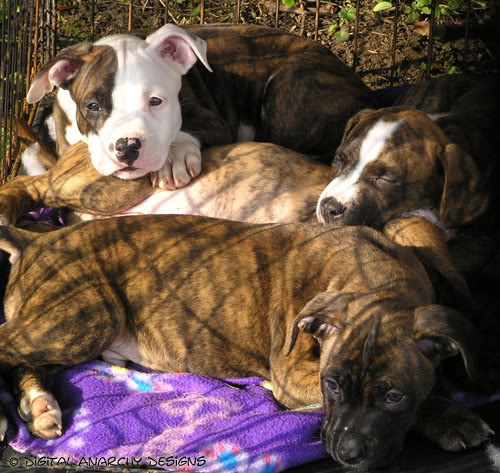
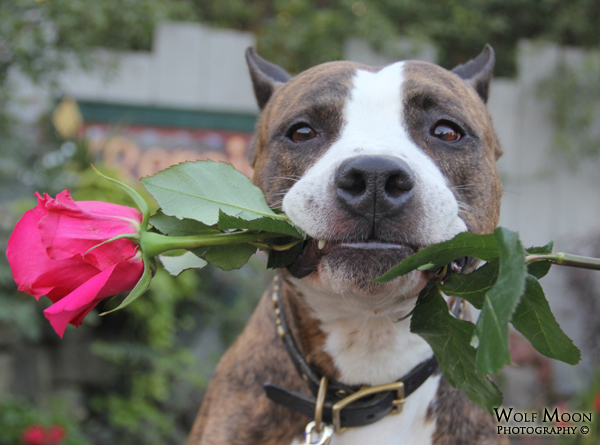
I get asked occasionally by friends who have “pet only” dogs why I got into showing purebred dogs when I am an incredibly staunch rescue and spay/neuter advocate. Truthfully, I have no real heroic, save-canine-kind answers. I honestly just wanted to. It’s a rather selfish reason but it is my reasoning. I wanted for myself and I vowed that I would never become one of the people who gave purebred ownership (and breeding) such a derogatory name and feeling amongst the rescue community.
Getting into the dog show community was the easy part. I attended a few shows and talked to people for a few months before the puppy search began. Most of the people I was blessed to speak with were friendly, down-to-earth and realistic about the work that lay ahead of me. (I did meet a few not-so-nice people, but they were definitely the minority!) I knew and fully expected the work (and the rewards that went with it!) ahead of me but these kind individuals really put it into perspective and helped me make my first baby steps into the conformation ring just a tiny bit less frightening.
Once I had my questions on what to expect when I finally found the “dog of my dreams,” the search began for just such a mythical puppy. It took nearly two long years of breeder hunting, researching, asking questions and pulling out wads of hair in frustration to find my first real show dog but it was well worth the wait (though I could have gone well past the puppy messes, chewed furniture and lost sleep!).
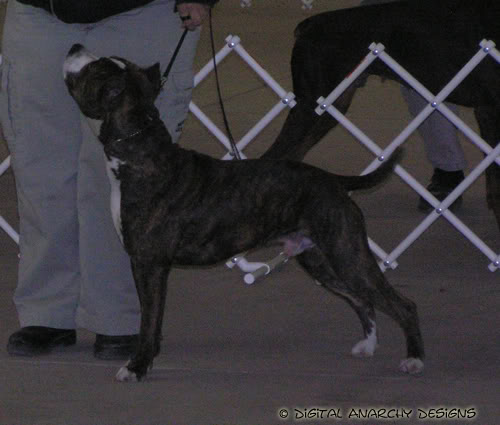
The tale doesn’t end here, though. This is just the tip of the iceberg that set my experience and time in the conformation ring across three registries.
With the amount of interest and emails generated due to my last post, I sought out my friend Cindy over at The Nut House to use an article she wrote almost two years ago on weight pull. She allowed us to republish it for anyone interested in getting into weight pull. Enjoy!
——————————————————————————-
What is Weight Pulling?
Weight Pulling (WP for short) is a new and growing sport for all breeds of dogs from the smallest Chihuahua to the largest Wolf Hound. What it involves depends on what organization you get involved with. Overall in all organizations it involves your dog pulling a certain amount of weight on a Sled, Cart, or Rail system a certain amount of feet in a limited amount of time.
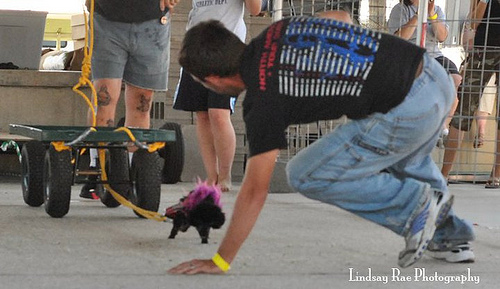
What Organizations can you pull with?
There are a lot of weight pull organizations that you can join with:
– United Kennel Club (UKC) – All breeds can pull here as long as certain rules are followed. Your dog if not already UKC registered, must be spayed/neutered, and either much have a Temporary Listing (TL) number or a Limited Privilege number.
– International Weight Pull Association – All dogs are welcome, all you need is a Weight Pulling harness and the entry fee (it’s $5 more if you’re a non-member)
– American Pulling Alliance – All dogs are welcome, just show up with a harness and your entry fee
– National Working Dog Association (NWDA) – Their main page has not been updated but all show up, and pay an entry fee.
There are other clubs you can join but they are only for certain breeds of dogs (Mainly the American Pit Bull Terrier) like the American Dog Breeders Association (ADBA) and the All American Dog Registry (AADR). (Both of these clubs do not allow all Pit Bulls to pull except at fun shows. You must have a UKC/ADBA/ABKC or BFKC registered APBT or AB (American Bully) to pull with these clubs.)
Ok, so now I know about the clubs, what do I need to start pulling?
First off all before you even start pulling your dog, you need to make sure your dog is old enough to pull. While most clubs allow your dog to start pulling around the age of 1 year, it’s not wise to start pulling large loads until your dog is done growing. (But it’s good to start young) If you really want to get into WP, even consider having a vet x-ray your dog’s hips and elbows to have a look for things that could cause your dog(s) health issues in the future. Your Vet will be able to tell you if WPing is OK for your dog or not. Some dogs with slight hip issues are fine pulling while some aren’t.
The first thing you’ll need is a weight pull harness! There are many different websites that offer harnesses for weight pulling, and I’m listing the one’s I have personally used, so I know the quality of the harnesses and how they work.
Brown Dog Designs – This is my favorite Harness maker ever. If you are going to be doing weight pulling for a while, and really getting into it then you want to break down and buy a BBD harness. They quality of these harnesses are the best. It’s kind of like buying a pair of shoes, you’ll be happy with the $25 shoes, but when you decide to splurge and but the $100 shoes once you realize what you’ve been missing. Her harnesses aren’t made to be pretty they are made to work, and work they do.
CD Pits – I’ve used CD Pits in the past. They are wonderful, many different looks to them, and are strong and durable. They are perfect for beginners and advance pullers alike
Tablerock – Nice harnesses, quality made with strength in mind. I love Tablerock because not only do they sell the WP Harnesses but they also sell wonderful quality drag sleds (I’ll explain those later) Table rock has GREAT training harnesses that allows it to grow with your dog. This is perfect for training a puppy to get use to a harness
Stillwater Kennel – I’ve never used their WP harness but I know people who have and they love them. Stillwater has adjustable harnesses though for 20lb + dogs that are perfect for WP training in younger dogs.
*NOTE* Many dogs ARE scared of the harness when you first try to put it on them. Use chicken or other high prized items to get your dog use to the harness before attaching any sort of weight to the harness. Take your time getting your dog use to the harness and make it a positive experience for them. Even think about putting your harness on your dog for walks at first (use a collar not the harness for the leash) but don’t rush it.
Second thing you’ll need is a collar. A simple belt or buckle collar for this is the best; you want it to be loose enough for your dog to breathe easily but tight enough to not fall off while training. Depending on what venue you decide to pull in depends on what type of collar you can use while your dog is pulling.
Third thing you’ll need is either rope or chain. I personally like chain because chain causes noise when it’s dragged and helps prepare the dogs in the long run for the noises that the carts make with weights on them. Starting off with either or is fine though. Rope is actually easier to tie the weights with for younger dogs, while chain is better for bigger weights for attaching (I use a spring snap to keep the weights on the chain).
Lastly you’ll need weight! For beginners, just start with an empty milk jug with some rocks in it. You want it to be easy and just help get your dog use to having the feeling of some resistance on their harness. As your dog gets older and/or more confident then start adding more weight. What to add depends on your dog. A larger dog say 50lbs you can easily add 10lbs without too much issues while a dog that weighs half that may only need 2 to 5 lbs added on. You could also buy a drag sled or make one if you want too. A drag sled is just a small sled that allows your weight to be evenly distributed. It’s not necessary but it’s a nice thing to have.
Ok, I have everything I need, now what?
Now comes the fun part, slowly working your dog up to pulling things!
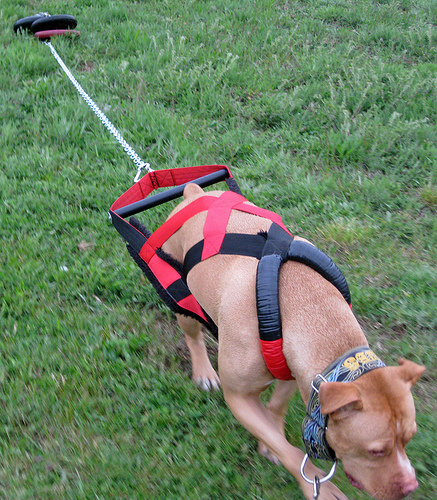
You only want to start pulling your dog 10 to 15 yards at a time. Right now you only want your dog to get use to the feeling and noises of the weights behind them. Hook a leash to your dog’s collar and stand in front of them. Call them to you and start walking backwards SLOWLY. Encourage your dog to pull the weight to you and praise them as they do. If they start to pull but stops as soon as they feel resistance, call them again, if that doesn’t work then LIGHTLY give your leash a tug to get your dog to move, and the praise like mad. Only work your dog for about 15mins the first time out. You don’t want your dog to get tired, bored, or frustrated. Do this for about a week before going onto the next phase, adding weight.
A question many people ask at this point is about reinforces (treats). Honestly if you can, refrain as much from food or toy reinforcements as much as you can. Why? Because in most USA organizations food and toy reinforcements are not allowed in the chute. It’s better to train the dog from the very beginning to pull for you and for fun. Adding toys or food is a great way to force your dog to do more then it can do which results in harming your dog. I have used food to get the dog use to the harness and for focusing on me, but never for pulling.
Once your dog is getting confident with the noise and weight behind them, it’s time to add some weight. NEVER SET YOUR DOG UP FOR FAILURE! You don’t want your dog to stop liking to pull. Don’t try to rush how much weight your dog is pulling. If your dog is pulling 10lbs just fine but at 15lbs he starts faltering, then go back to 10 lbs for a few more days then try 15lbs again. How much weight to add depends on your dog. If your dog is only 10lbs, then adding 1 lb of weight is a good starting place, if your dog is 50lbs then 15lbs is a good starting. If it’s really easy for your dog to pull GREAT but do not add more weight, at least this time around. You want it to be easy right now. This isn’t about building mussel but more about building confidence in your dog. You want your dog to feel great about what it is doing, and enjoy it.
Keep working your dog over weeks and months until your dog is at 1 ½ time its own body weight. So if your dog is 50lbs, it should be able to drag 75lbs. At this point your dog is ready for another step, working a cart. At this point you should be working with a mentor or looking for a mentor for help. They will have weight pull cart or rail system set ups or know where to find them. My local WPers have gatherings at one person’s house to work their dogs on his cart and to give each other tips on how to work their dogs better and how to be better themselves.
Just remember to have FUN with weight pulling and fun with your dog. Too many people forget this step and I personally think it’s the most important step of all.
Fore more information or to see the original post, click here.
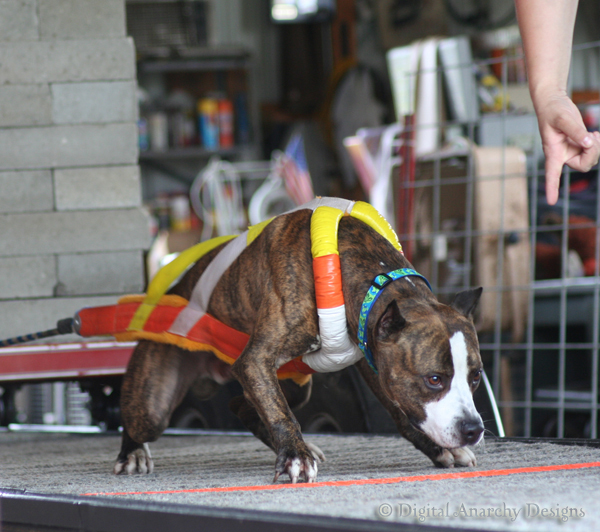
The sport of weight pull is an incredibly controversial sport amongst many dog owners. You have on one hand those that absolutely love the sport and the bond it creates with the dog and then on the other you have those who hate and/or fear the sport as a form of cruelty and abuse. Those same people feel that these dogs are being exploited for the purposes of human gain and the coercion of the dogs into performing on the track. This, however, couldn’t be farther from the truth for the majority of the weight pull community. (Yes, there are a few bad apples – in every sport. It’s just human nature.)
Once upon a time, I believed the same way those that are against it thought. I felt it was barbaric and cruel. I took the time, however, to go to a pull and found out how completely wrong I was. These dogs had absolute adoration for their handler/owner like dogs I’d seen paired and running agility or obedience routines.
From that moment on, I was hooked. I sucked up every little tidbit of information on training, conditioning, equipment and rules that I could get my hands on. I bought my first harness from Alaskan Dream Dog and had a go at weight pull. It was a very good harness for a new puller but as I became more experienced and talked to more people I realized I needed a harness upgrade and sank the money into one from Brown Dog Designs. It’s been madness ever since.
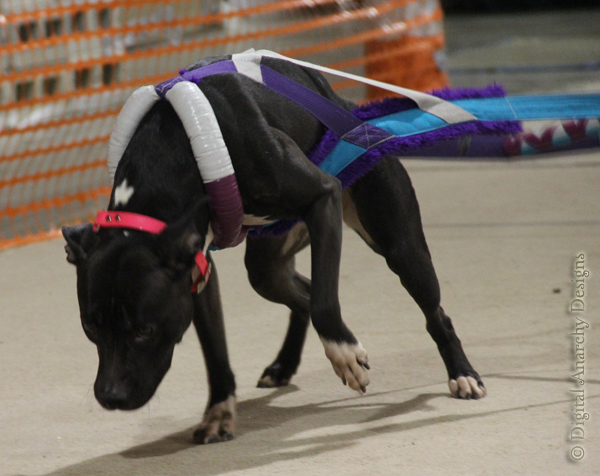
The love for the sport is addicting. If you luck out and get a dog that absolutely loves to work (you know what I mean – the whole body wiggling, barking, prancing, etc. when they see that harness get pulled out…) you’ll never turn back and will probably catch the bug like so many of us that have been caught – hook, line and sinker.
That being said, not every dog is going to love weight pull. There are some dogs that absolutely loathe the concept of being constrained or digging in to get that cart the full sixteen feet down the track. If a dog doesn’t have that desire for this sport even the strongest bond isn’t going to make them work any harder or better no matter how persistent you are or how much you beg and grovel. What many people don’t realize is that if you push a dog that isn’t confident you can ruin them and shut them down completely.
I’ve seen it happen first hand unfortunately. Sadly, every single time it happened it was with an overzealous new handler who meant well but didn’t know any better. They do say you ruin your first dog but it doesn’t feel any better once you’ve realized you’ve done it. If you’re able to salvage what you’ve incorrectly done, it will be a slow go to repair the damage and get that dog’s innate ability into focus once more.
If you’re like me and go head over heels for this sport, I would suggest you attend a pull or two and pick the brains of all of the experienced weight pullers at the pull. The majority of people that attend these events are more than happy to talk to someone new and interested in the sport – even the highly competitive handlers. They know that at some point in time they too were in the same spot that the newbie they’re talking to is in right now.
Regardless of how your dog does, at the end of the day even if you don’t go home with the coveted Most Weight Pulled (MWP) or Most Weight Pulled per Pound (MWPP) trophy or ribbon you’ve still had a phenomenal day with your dog. You’ve worked together as a team. You cheered on new and old dogs while their handlers worked the same track and pulled the same weights you did – some just better than others.
Seeing the smile on the other handler’s faces and the ultimate love and adoration of their dog as they cross the finish line and the judge yells, “Pull!” is one of the most wonderful sights to behold. Most of us aren’t in it for the glory or the fame. They’re a nice additional bonus (as are those dust collectors that are stored in boxes waiting for us to move and have a wall of fame for our dogs) but they’re not the cream of the crop. Spending time with your fellow competitors, their dogs and your dogs means more in the end. It helps feed the desire to get back out there and do it all over again – just one more time…or maybe more than more time.
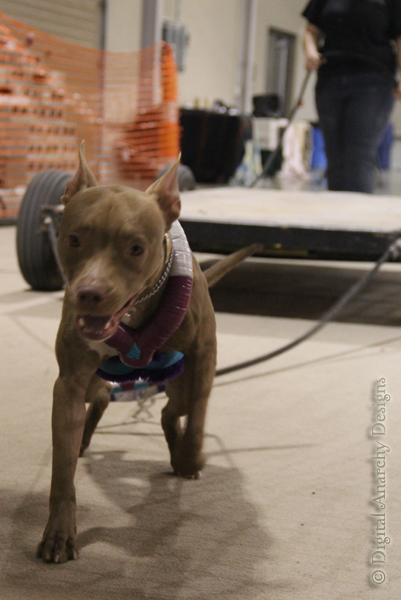
I don’t claim to be a world renowned dog trainer or have umpteen years in training dogs (though I’d like to think I’m pretty good and always willing to try something new…). The reality of the matter is I’ve only had a passing interest in canine sports in the last seven-ish years or so. I’ve done my share of pet obedience prior to that and always had easy dog … one that was compliant and had no real issues to speak of. That all changed six years ago when I was given Ryker.
Ryker started off as an easy dog. He got along with everyone. He has drive in spades. He enjoyed learning and being challenged with new tasks and goals. He is also dog aggressive/reactive. For anyone who’s ever had to deal with this issue, they know what a challenge it is doing competitive sports that involve being in close proximity to another dog. The worry that passes through you when you’re training – especially in off leash scenarios with a dog that is relatively reactive can be excruciatingly nerve wracking.
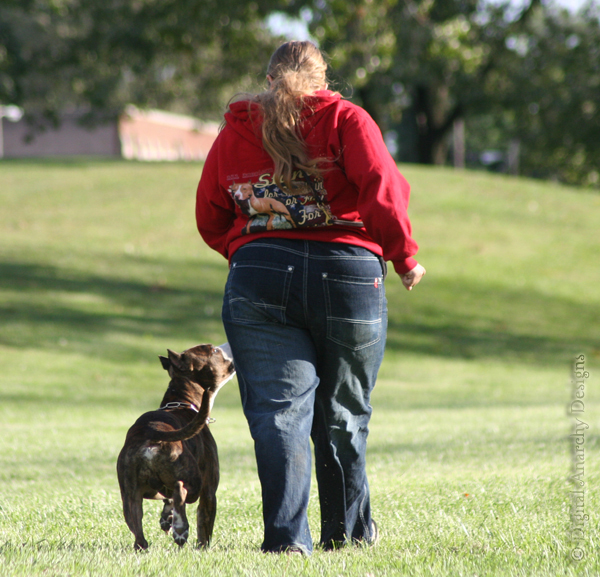
For years I was terrified to compete in competitive obedience with Ryker because I was worried he’d go after another dog. We trained and socialized and then trained some more. I was never quite comfortable enough to take the plunge into obedience. It caused me to falter on more than one occasion. I would fall up short when working with dogs that he was comfortable around because they’d get too close and I would tense up and then he would react.
The reality was becoming more and more apparent that it wasn’t so much a dog problem. It was a handler problem. I was the issue. My body language and reactions set him up to fail when he knew exactly what he was supposed to be doing. After all, we’d done this all for years and he was a pro at this and so was I.
With the help of some very close people in my life (you guys know who you are), I finally gave in and we attempted our first leg to obtaining his United Companion Dog (AKC Companion Dog equivalent). We NQ’d during the off leash heeling pattern. Why? Well, a previous dog who’d run the course before us had hiked his leg on a pole and having an intact, domineering brat of a dog…well, Ryker had to follow suit and let that dog know it was his turf. (Little did I know that this little action would come back to haunt us at other obedience venues too. *headdesk*)

My heart sank because I knew I’d NQ’d. The judge, however, allowed us to continue through the rest of the trial and he was beautiful – even the recall over the jump that we’d only done once prior. We finally got to the part that made the butterflies start fluttering around like they were on crack in my stomach – the group sit. I wanted to run to the bathroom and throw up my lunch. My hands were shaking and I reflexively kept changing positions on the leash.
My friend Jen and her boy, Icon, were with us and I continued to nervously eye up the Novice A – both of them had NQ’d also when they blew off every off leash exercise known to man. Neither of them wanted to stay when their handlers left them. It smelled like trouble in my book. The judge, seeing that neither dog wanted to listen to the handler, asked them both to remain with their dogs – on leash. I let out a big sigh of relief.
We did our group exercise. Ryker was placed in a sit/stay next to Icon – a dog he had trained with for many hours and was comfortable with – on one side and a very calm Novice C dog who completely ignored every attempt at stink eye he shot at the strange dog. We finally left our dogs.
It seemed like an utter eternity standing across the ring willing Ryker to keep his furry fanny firmly planted on the ground and to not get snarky with his neighboring canines. It was finally all over. The judge released us to return to our dogs. My boy had done it. He finally did it. I was elated. I was beyond proud of him. I didn’t care that we’d screwed up and didn’t actually qualify. He had done what I felt to be the impossible. He had helped me overcome the biggest gap in the bridge of our training – my fear.
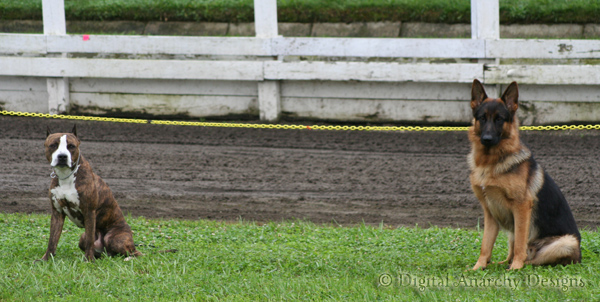
I knew, right then and there, we could do it and get his UCD. I knew that all that we had worked for, trained for, socialized for…it was all a reality. It could be done. Above all else, I was proud of my dog. The dog I never thought could do anything that involved having another dog in the ring. I knew that he -the dog that looked at another dog and puffed out his chest and barked his fool head off at – could do it and that I helped him get there even as much as I’d held him back.
Consequently, there was a second trial that weekend. I signed us up for it. The butterflies returned but not so furiously. Now they were big, beefy beasts that were proudly strutting their stuff and proclaiming that we could do it and they were my cheerleading squad. We were on a mission and we went in and owned the ring. We managed to wrangle in our first qualifier – even if we squeaked by with a 178. I was on cloud nine. We had done what I thought was the impossible and made it possible. I truthfully owe that small victory to the dog who never failed to amaze me and the people who knew we could do it.
It’s not much, but we did it. We’re still battling with his loathing of other dogs but each small step makes me realize that we will get through it and we can do anything we set our minds to with a little bit of elbow grease and a good old-fashioned kick in the pants from friends when I start to doubt our foundation as a team.
Now we have one down and two more to go. Here goes nothing!
When you bring up health testing amongst pit bull breeder’s you’ll hear an entire range of reasons for and against the practice. Unfortunately for our breed, we need to be utilizing every available resource to help maintain and improve upon the absolute travesty that keeps occurring.
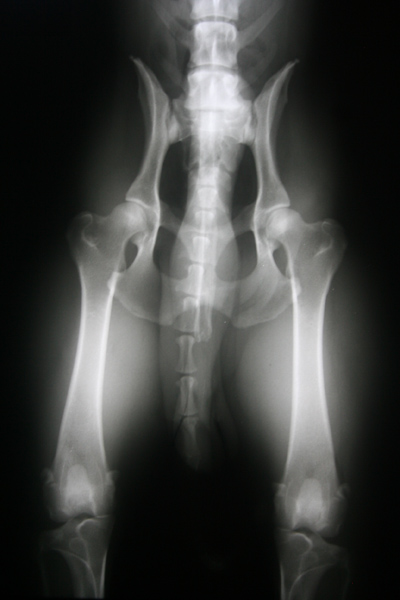
In OFA hip scores, from January 1974 until December 2011, only 733 dogs have been tested – of those tested, we had 24.1% dysplastic. That’s atrocious for a working breed like the American Pit Bull Terrier. Why aren’t more people testing these dogs? Out of 733 dogs tested there were 177 that are considered dysplastic. Considering the number of APBTs that are registered yearly with the ADBA and UKC, the number of dogs tested is incredibly low.
The overall cost of health testing a breeding dog or bitch truthfully isn’t much in the long run – especially if a breeder plans to utilize the stud or bitch more than once. It should also give the puppy buyers AND the breeder piece of mind knowing that they did everything possible to reduce the potential of throwing a genetic disease.
Unfortunately, not all breeders believe this and give reasons like, “It’s too expensive” or “My dog works just fine. There aren’t any problems in the line. It would show.” Those of us who do health test know this is complete and total baloney.
A dog who is dysplastic, has cardiac or thyroid issues can and still do work through it more often than not without showing any symptoms. That being said, they eventually do get to the point when they’re showing and then what happens? If it’s a cardiac issue the dog could fall over and die on a walk or if it’s dysplastic the dog’s quality of life could diminish immensely as a young dog. Neither of which is fair to the dog or the people who have to see the animal suffer – especially if it’s a puppy buyer.
No, health testing doesn’t guarantee you’ll get a puppy that doesn’t have a health condition since it takes ninety-two chromosomes to match in every puppy and the good matches aren’t always going to be possible. That being said, it doesn’t mean it won’t significantly reduce the chances of a problem in an unborn puppy. The risks associated with not health testing far outweigh those of testing and getting a puppy with a genetic condition that reduces the quality and quantity of that dog’s life and the time they will spend in the loving hands of their owner. To me, personally, it doesn’t add up as to why more and more people AREN’T testing for the betterment of the American Pit Bull Terrier.
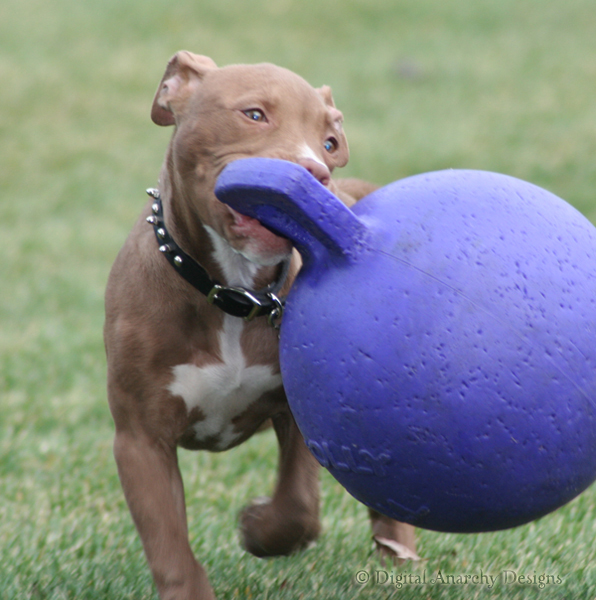
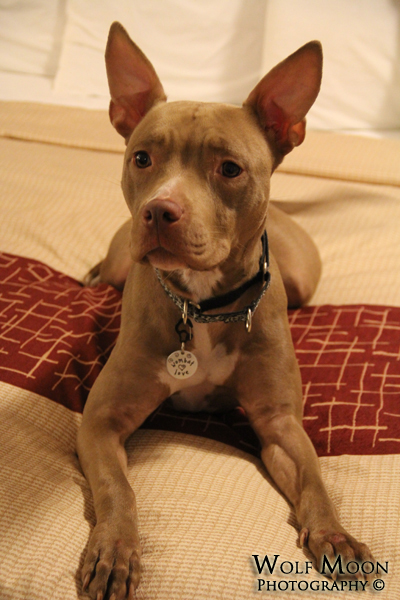
Oh, my goodness! She’s two! She’s two! Can you believe it? I sure can’t. It’s hard to believe that just two years ago, little miss Mika was being whelped by her momma, Birdie. We’ve been blessed with every single day we’ve had with this little girl and will be blessed with the days to come. She has been everything we could have ever asked for.
Our “new moon” is growing with leaps and bounds in our heart and the hearts of others. She continues to astound us with her desire to work, her beautiful personality and the absolute ‘can do’ attitude. She is has come a long way and we have so many more plans that we’d love to try and accomplish with her.
From a little wiggly puppy to a beautiful young lady, she accomplished her UKC conformation Champion title at eight months and her first Grand Champion leg two months later. We hope to eventually accomplish all available obedience titles, maybe some weight pull and agility and Schutzhund. We will see where we can go and how she progresses with time. We’re just taking our time and having a blast with her. We have many years to go and lots more adventures to have.
We love you, Mika sweetie. Happy Birthday, kiddo.
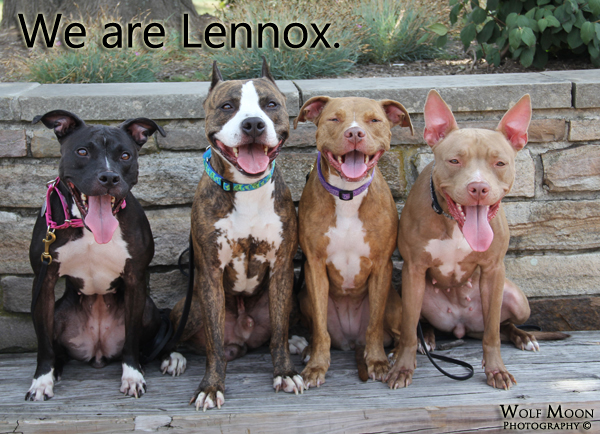
There are likely hundreds of blog posts out there on this very topic. The death of a dog killed by the stupidity of legislation that targeted an animal solely based on the physical characteristics set forth to be deemed ‘dangerous.’ Lennox was held for two years after being seized by local animal control officials for fitting the description of a ‘pit bull-type dog’ – which is illegal in Northern Ireland – and euthanized after a hard fought battle by his family.
During his incarceration, photographs of severe neglect surfaced and showed the suffering that he was enduring at the hands of ‘humane’ officials. His family was denied one last chance to see him before his imminent destruction.
Those same city officials also denied the family the ability to reclaim his body or his collar (something their daughter wanted as a memento of her dog). Many offered safe passage as an alternative to death and were denied. In short order, the Belfast City Council simply wanted to kill Lennox because he ‘could have been’ a pit bull – even if he had done absolutely nothing in the five years the family had raised, vetted, neutered, licensed and cared for this dog.
Breed Specific Legislation does little more than kill dogs who have done nothing wrong. The dogs seized for being ‘prohibited’ animals are, more often than not, owned and cared for my responsible homes that socialize, train and manage their animals so that they are not a nuisance to the public. In the same token, families are ripped apart as their furry family member is taken, and often killed, in the name of public safety. It has been proven time and time again that breed bans do not work. While pit bull bites may drop drastically in number, the numbers of other breeds and mixes typically go on a drastic incline.
While the legislation may look absolutely bomb-proof on paper, the consequences are abhorrent. Innocent lives are extinguished for nothing more than piece of mind. “So what if a few dogs die,” the proponents of the legislation often say, but it does matter. It will always matter. If enough people sing from the roof tops about the injustices suffered by Lennox and other dogs who have died for being ‘pit bulls’ we may finally have a case to show that it isn’t just ‘pit bull people’ that care about this subject…it’s the world. With hope, Lennox’s death will not be in vain and legislative bodies across the globe will see the outpouring of effort by all animal lovers for non-breed discriminatory legislation and stiffer penalties for individuals who choose to be irresponsible with their furry, scaled or feathered family members.
For now we stand in solidarity and hold true to the memory of Lennox and the thousands of other dogs who have died because some government body said that they were inherently dangerous. Today it was Lennox. Who will it be tomorrow? Who will they come for next?